
HVAC Leads Without Door Knocking: 7 Proven Strategies
For decades, knocking on doors has been the default growth tactic for HVAC contractors. You grab a stack of door hangers, walk a neighborhood, and hope someone answers. But this method is inefficient, uncomfortable for many technicians, and increasingly ineffective as more homeowners screen calls and ignore unsolicited visitors. The better path involves building a digital lead engine that brings high-intent customers to you. This article lays out exactly how to get HVAC leads without door knocking, using tools like pay-per-call advertising, local SEO, and strategic partnerships. By the end, you will have a clear roadmap to replace cold walks with warm inbound calls.
Why Door Knocking Falls Short for HVAC Growth
Door knocking feels productive because you are physically moving and talking to people. However, the numbers tell a different story. A typical door-knocking session might yield one conversation per twenty homes, and only a fraction of those conversations turn into booked jobs. The time cost is enormous. A technician or salesperson spending four hours walking a route could have handled two service calls instead, generating revenue immediately rather than chasing uncertain leads.
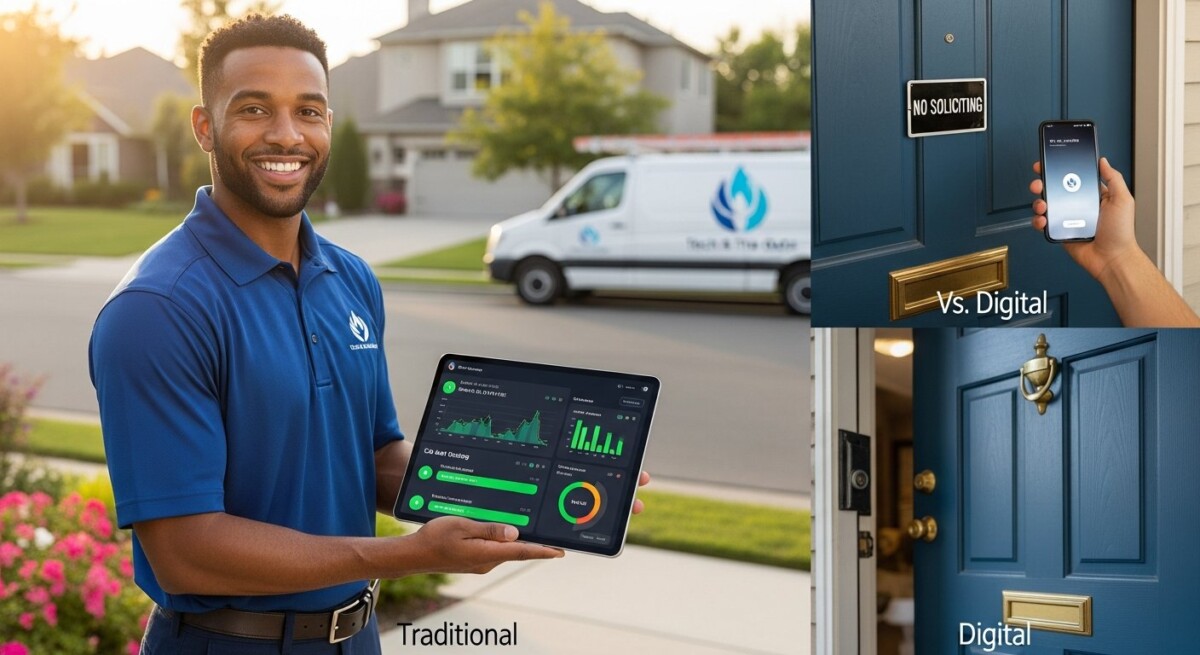
Beyond efficiency, door knocking creates a negative brand impression for many homeowners. People value their privacy and often view unsolicited visits as intrusive. This can damage your reputation before you even get a chance to quote a repair. Digital methods, by contrast, let homeowners signal interest on their own terms. When someone fills out a form or calls a number they saw in a search result, they are already pre-qualified and ready to engage. That shift from interruption to invitation is the foundation of modern HVAC lead generation.
Pay-Per-Call Advertising: The Shortcut to Phone Leads
Pay-per-call advertising is one of the most effective ways to generate HVAC leads without door knocking. In this model, you pay only when a potential customer calls your business after clicking a phone number on a publisher’s website or ad. The call comes with intent. The person is already searching for heating or cooling help, so your conversation starts with a problem, not a cold introduction.
Leading platforms like Astoria Company specialize in connecting HVAC contractors with qualified callers across their network of publishers. You set your budget, choose your service area, and receive live transfers of homeowners who need immediate assistance. The key advantage is speed. A pay-per-call lead can ring your phone within minutes of a homeowner searching online, allowing you to dispatch a technician while the customer is still motivated to book. This reduces the chance of them calling three other companies and hiring the first one that answers.
To succeed with pay-per-call, focus on three metrics: answer rate, call duration, and close rate. Answer every incoming call quickly, ideally within the first ring. Track how long conversations last; longer calls usually indicate genuine interest and a thorough discussion of the problem. Finally, measure how many calls result in a booked service appointment. When you optimize these numbers, your cost per acquisition drops and your return on ad spend rises sharply.
Setting Up Your First Pay-Per-Call Campaign
Start by identifying your most profitable service lines. Emergency repairs, AC tune-ups, and furnace replacements often convert best because they address urgent needs. Next, choose a geographic radius that your team can reach within one hour. Overly broad targeting wastes budget on leads you cannot serve quickly. Finally, create a simple script for your dispatchers or technicians that confirms the customer’s address, describes the issue, and sets clear expectations for arrival time. With those elements in place, you can launch a campaign in under 48 hours and see your first calls within days.
Local SEO: Own the Search Results for HVAC Services
When a homeowner’s air conditioner stops working in July, their first move is almost always a Google search for “AC repair near me” or “HVAC company [city name].” If your business does not appear in the local map pack or the top three organic results, you are invisible to that high-intent audience. Local SEO is the long-term strategy that ensures you show up when it matters most.
The foundation of local SEO is your Google Business Profile (GBP). Claim and verify your listing, then fill out every field completely. Include your service categories, business hours, phone number, and high-quality photos of your team and completed jobs. Ask satisfied customers to leave reviews, and respond to every review promptly. Google uses review quantity, recency, and sentiment as ranking signals. A steady flow of positive reviews pushes your profile higher in the map pack.
Beyond the GBP, optimize your website for local keywords. Create separate service pages for each city or neighborhood you serve. For example, a page titled “Air Conditioning Repair in Oakwood” should include local landmarks, zip codes, and testimonials from that area. This signals to Google that your business is relevant to searchers in that specific location. Also, ensure your website loads quickly on mobile devices. Many HVAC searches happen from phones, and a slow page can cause potential customers to bounce to a competitor.
Referral Programs: Turn Customers Into a Sales Force
Your existing customers are your most credible marketing asset. A referral from a trusted neighbor carries more weight than any online ad. Yet many HVAC companies leave this goldmine untapped because they never ask. A structured referral program changes that by giving customers a simple, rewarding way to send business your way.
Design a program that offers a tangible incentive for both the referrer and the new customer. Common models include a $50 credit on the next service call, a free annual tune-up, or a gift card to a local restaurant. The incentive does not need to be large; it just needs to be easy to understand and redeem. Promote the program on your website, in email newsletters, and on your service invoices. When a technician finishes a job, they can hand the customer a referral card and explain the offer face-to-face.
Track your referral sources so you know which customers are driving the most new business. A simple spreadsheet or a field in your CRM will suffice. Over time, you will identify your top advocates and can reward them with even greater perks, such as priority scheduling or discounted maintenance plans. This transforms passive satisfaction into active promotion without any door knocking required.
Content Marketing: Educate Homeowners and Build Trust
Homeowners rarely search for “HVAC contractor” when everything is working fine. They search when something breaks, but they also search for information before a problem occurs. Queries like “how to change an AC filter” or “signs your furnace needs replacement” are common. By creating helpful content that answers these questions, you position your company as the go-to authority when a real need arises.
Start a blog on your website and publish one or two articles per month. Focus on common HVAC issues, maintenance tips, and seasonal checklists. For example, a post titled “5 Signs Your AC Compressor Is Failing” will attract homeowners who are experiencing those symptoms and need professional help. Include a clear call-to-action at the end of each article, such as “Call us for a free diagnostic appointment.” This converts informative readers into qualified leads.
Video content works especially well for HVAC. Record short clips showing your technicians explaining a common repair or demonstrating how to change a filter. Upload these to your YouTube channel and embed them in your blog posts. Video builds trust because customers can see your team’s professionalism before they ever pick up the phone. Share these videos on social media platforms like Facebook and Nextdoor, where local homeowners actively seek recommendations.
Paid Search Ads: Capture High-Intent Searchers Instantly
While local SEO builds organic visibility over months, paid search ads (Google Ads) deliver instant placement at the top of search results. When a homeowner types “emergency AC repair” into Google, a well-optimized ad can put your phone number front and center before any organic listing appears. This is especially valuable during peak seasons when competition for leads is fierce.
Build your campaign around high-intent keywords that signal an immediate need. Examples include “furnace not heating,” “AC unit leaking water,” and “24-hour HVAC service.” Use negative keywords to filter out searches that do not match your business, such as “free estimate” if you charge for diagnostics or “DIY repair” if you only offer professional services. Set a daily budget that aligns with your average job value and your target cost per lead.
Call-only ads are a powerful option for HVAC businesses. These ads display your phone number prominently and allow users to call directly with one tap on mobile devices. Combined with call tracking, you can measure exactly how many calls each ad generates and calculate your cost per lead. Adjust your bids and ad copy based on performance data. A/B test different headlines, such as “Same-Day AC Repair” versus “Licensed HVAC Technicians,” to see which resonates more with your local audience.
Strategic Partnerships With Real Estate Agents and Property Managers
Real estate agents and property managers interact with homeowners and landlords every day. When a home inspection reveals an aging furnace, or a tenant reports a broken air conditioner, the agent or manager needs a reliable HVAC contractor to call. By building relationships with these professionals, you create a steady stream of referrals without ever knocking on a door.
Identify local real estate offices and property management firms in your service area. Reach out to their owners or office managers with a simple offer: a discounted inspection or priority service for their clients. Provide them with branded flyers or digital assets they can share with homeowners during the closing process or lease signing. Follow up quarterly to remind them of your services and to thank them for any referrals they have sent.
Consider offering a commission or finder’s fee for each referral that turns into a paid job. This aligns incentives and keeps your business top of mind. Over time, these partnerships can become one of your most reliable lead sources, generating consistent business during both peak and off-peak seasons. The key is to be responsive and professional every time. A property manager who receives a glowing report from a tenant will keep sending referrals for years.
The shift from door knocking to digital lead generation does not happen overnight, but the payoff is substantial. Each strategy outlined here builds on the others. Pay-per-call advertising fills your pipeline immediately while local SEO builds lasting visibility. Referral programs and content marketing deepen trust, and paid ads capture urgent demand. As you implement these methods, track your results and double down on what works. Your phone will ring more often, your team will spend less time walking and more time working, and your business will grow on your own terms.