
What Is Dual Delivery Lead Management Software?
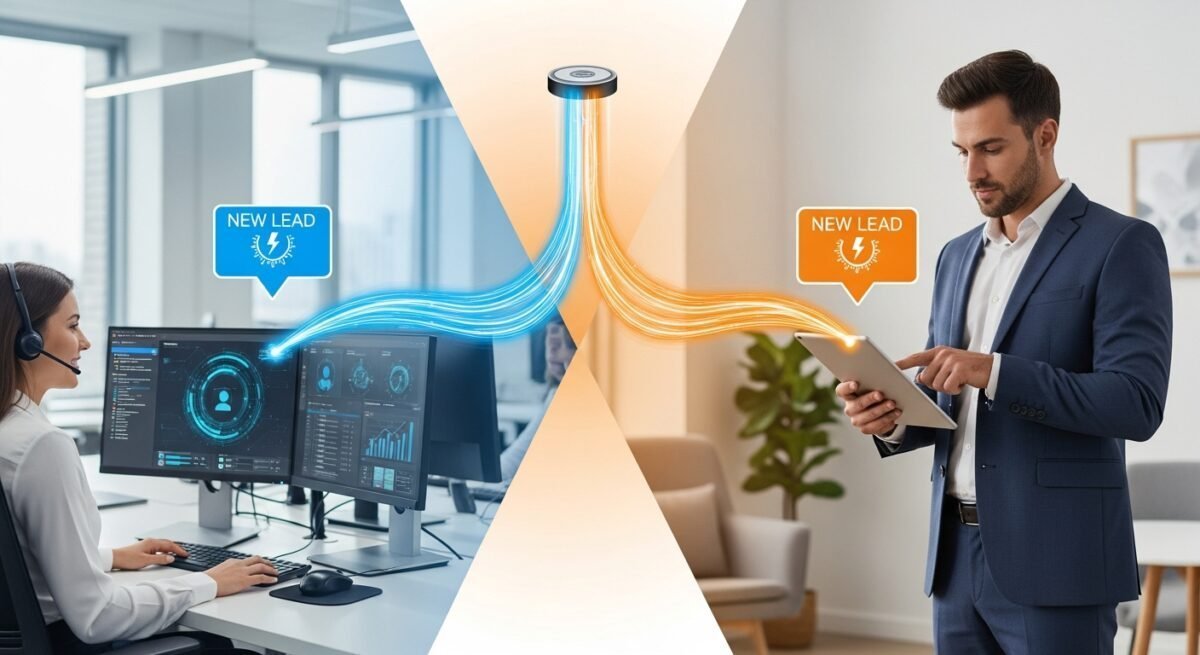
Dual delivery lead management software simultaneously routes leads to your call center and field teams, ensuring immediate contact and maximizing conversion rates.

By Author 4
In the high-stakes world of sales and marketing, a lead is more than just a name and an email. It’s a potential customer, a future relationship, and the lifeblood of your business growth. Yet, for many companies, the journey from initial inquiry to closed deal is fraught with friction, missed opportunities, and internal confusion. This is especially true when leads come from multiple sources and need to be routed to different teams, such as a call center and a field sales force. Traditional lead management systems often create a binary choice: send the lead to one channel or the other, forcing a gamble on the best path to conversion. But what if you didn’t have to choose? Enter a transformative approach: dual delivery lead management software. This powerful strategy and the technology that enables it are redefining efficiency and maximizing revenue by ensuring no lead ever falls through the cracks.
Defining the Dual Delivery Approach
Dual delivery lead management software is a specialized platform designed to simultaneously route a single incoming lead to two distinct channels or teams for immediate, parallel follow-up. The core philosophy is redundancy and speed. Instead of a lead sitting in one queue, waiting for a single point of contact to respond, it is proactively delivered to two agents or teams at the same time. The first responder secures the lead and begins the engagement, while the other is notified that the lead has been claimed, preventing duplicate work and customer annoyance. This model is particularly critical in industries where the window of opportunity is measured in minutes, not hours, such as home services, insurance, automotive sales, and high-intent financial services.
The “dual” aspect typically refers to the combination of phone and digital channels. For instance, a lead generated from a website form for a roofing quote would be instantly sent via an integrated dialer to a call center agent for a live conversation. Simultaneously, that same lead’s information would be pushed to a field sales representative’s CRM or mobile app, equipping them with the details to schedule an appointment or prepare for a follow-up visit. This creates a seamless, omnichannel experience for the customer, who may prefer immediate phone contact or later digital follow-up, while internally it creates a competitive yet coordinated race to connect. The software manages the entire handshake, ensuring transparency and data synchronization between teams.
Core Benefits and Business Impact
The implementation of a robust dual delivery system is not merely a technical upgrade, it’s a strategic business decision with measurable outcomes. The primary advantage is a dramatic increase in lead response time, which directly correlates to conversion rates. Studies consistently show that contacting a lead within five minutes versus thirty minutes can increase the likelihood of qualification by multiples. By having two teams poised to act, you effectively double your chances of making that critical first contact during the golden hour. Furthermore, this approach significantly reduces lead leakage. In a single-delivery model, a lead can go cold if the assigned agent is busy, on break, or simply less motivated. Dual delivery creates inherent accountability and a safety net.
Beyond speed and coverage, this software fosters healthy internal competition and performance transparency. Managers gain clear visibility into which channels and agents are most effective at securing leads, providing valuable data for coaching and incentive structures. From a customer experience standpoint, it eliminates the frustrating silence that often follows an online submission. Whether they pick up the phone to an immediate call or receive a timely text from a local expert, their need is acknowledged rapidly, building trust and brand credibility from the first touchpoint. The operational efficiency gains are also substantial, reducing the manual work of lead distribution and eliminating inter-departmental disputes over lead ownership.
Key Features of Effective Dual Delivery Software
Not all lead management tools are built to handle the complexities of true dual delivery. When evaluating platforms, businesses should prioritize a specific set of features that enable seamless, conflict-free parallel routing. The foundation is a robust, real-time integration between the lead source (like a website, paid ad, or call transfer service) and the dispatching engine. This engine must be capable of applying sophisticated business rules. For example, rules can be set based on geographic territory, service type, agent availability, or even the time of day to ensure leads are delivered to the right pairs of resources.
Another non-negotiable feature is intelligent duplicate prevention and lead claiming. The system must have a locking mechanism so that when one agent initiates contact, the lead is instantly marked as “contacted” or “claimed” in the other channel’s view. This prevents two agents from calling the same customer seconds apart, which is a surefire way to appear disorganized. Comprehensive logging and attribution are equally vital. Every touchpoint, from the initial form fill to the call attempt and the field rep’s notes, must be recorded in a unified timeline to provide a complete view of the customer journey and accurate ROI calculation for marketing spend. Finally, the platform should offer detailed analytics and reporting dashboards that track key metrics like speed-to-lead, contact rates, channel performance, and conversion funnel analysis.
Essential features to look for include:
- Real-time lead distribution with configurable business rules
- Simultaneous routing to phone (dialer/softphone) and digital (CRM, SMS, email) channels
- Instant lead claiming and duplicate prevention locks
- Unified activity logging and customer journey tracking
- Performance analytics and ROI reporting dashboards
- Mobile accessibility for field sales teams
Ideal Use Cases and Industries
The dual delivery methodology is powerful, but it is especially transformative for specific business models where lead value is high and buying decisions are time-sensitive. Any industry that relies on a combination of immediate phone engagement and scheduled field appointments is a prime candidate. The home services sector, including roofers, plumbers, HVAC companies, and remodelers, perfectly exemplifies this. A homeowner with a burst pipe or storm damage needs immediate reassurance and scheduling. A dual delivery system ensures a call center agent can provide that instant empathy and schedule, while simultaneously alerting the local technician with the job details.
Similarly, the automotive industry, both for sales and finance, benefits immensely. A lead for a specific car model can be routed to both the internet sales manager at the dealership and the specific salesperson on the floor, ensuring the customer gets a prompt response regardless of how they choose to engage. In insurance, particularly for auto, home, and health quotes, leads require fast contact to capture the customer while they are still shopping. A dual delivery approach can push the lead to a licensed call center agent and a local insurance agent’s workflow at the same time. Other high-value applications include business-to-business (B2B) sales with inside and outside sales teams, educational program inquiries, and medical or wellness service providers where consultations are key.
Implementation and Best Practices
Successfully deploying dual delivery lead management software requires more than just a technology purchase, it demands careful planning and change management. The first step is a thorough internal audit of your current lead flow. Map out every source of leads, the teams involved in handling them, and the existing handoff processes. Identify the pain points: where are leads getting stuck, delayed, or lost? This analysis will inform the business rules you configure in the software. It is crucial to involve stakeholders from all affected departments, sales, marketing, call center operations, and field teams, in the selection and planning process. Their buy-in is essential for smooth adoption.
Once a platform is selected, start with a phased rollout. Begin with a single lead source or one product line to test the rules, the technology integrations, and the team dynamics. Use this pilot phase to refine workflows and train users extensively. Training should not just cover how to use the software, but also the new process philosophy: the importance of speed, the protocol for claiming leads, and how communication between teams should work. Establish clear service level agreements (SLAs), such as a target for responding to leads within two minutes, and use the software’s analytics to hold teams accountable. Continuously monitor the data, looking for bottlenecks in either channel, and be prepared to adjust routing rules or staffing to optimize the flow. Remember, the goal is not to create internal conflict, but to foster a collaborative environment where the entire organization wins by converting more leads.
In today’s competitive landscape, customers expect immediate and seamless engagement. A lead management system that forces them into a single, slow channel is a liability. Dual delivery lead management software represents a paradigm shift, moving from a sequential, gamble-based process to a parallel, safety-net-enabled strategy. By leveraging technology to ensure every lead is met with immediate, coordinated attention from your best resources, you transform potential into profit. It bridges the gap between digital inquiry and human connection, empowering both your call center and field teams to operate at their peak effectiveness. For businesses looking to eliminate waste, accelerate growth, and deliver exceptional customer experiences from the very first moment, adopting a dual delivery approach is not just an option, it is becoming a critical necessity for sustainable success.