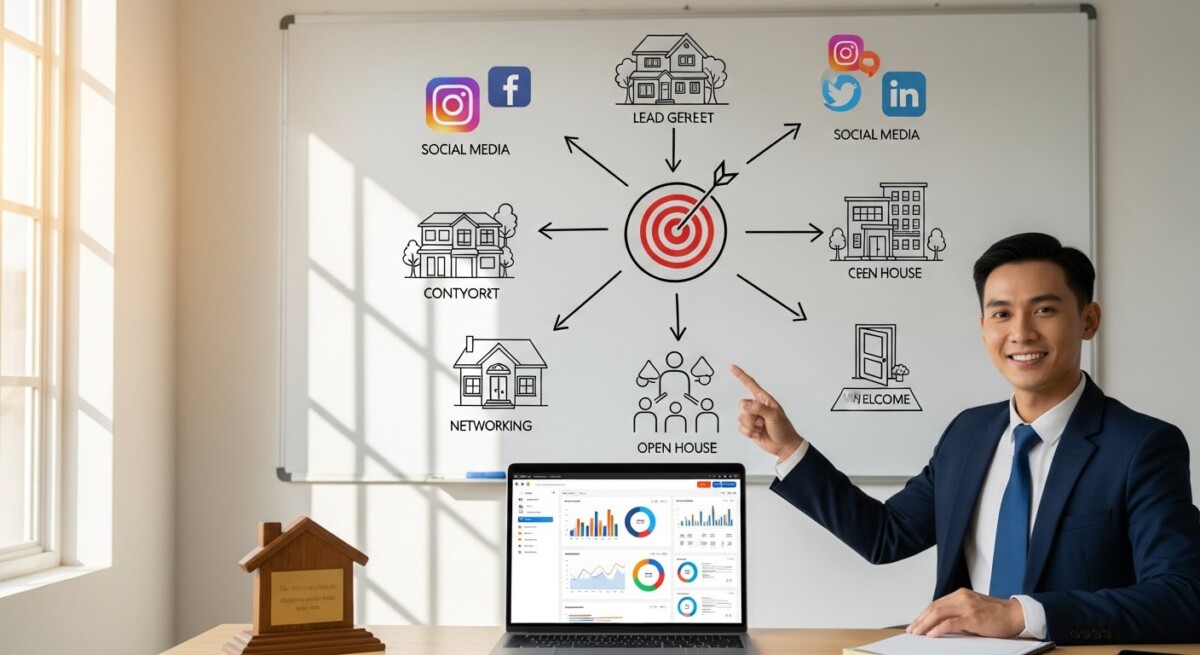

A Strategic Framework for Real Estate Buyer Lead Generation
In the competitive world of real estate, a consistent pipeline of qualified buyer leads is the lifeblood of a sustainable business. Yet, for many agents, lead generation feels like a scattered effort, a constant chase after the next shiny tactic without a cohesive plan. The key to moving from sporadic success to predictable growth is not just in knowing individual methods, but in building a strategic, repeatable system. This framework moves beyond random acts of marketing to create a holistic engine for attracting, nurturing, and converting potential home buyers. It’s about working smarter, not just harder, to ensure your time is spent with motivated clients, not just tire-kickers.
Shifting from Tactics to a Buyer-Centric System
The first, and most critical, step is a mental shift. Stop thinking in terms of isolated “leads” and start thinking about the buyer’s journey. A person doesn’t decide to buy a home in an instant. They move through stages: awareness of a need, consideration of options, and finally, the decision to purchase. Your lead generation system must serve each of these stages. A tactic like running Facebook ads targets the awareness stage, while a robust email nurture sequence serves the consideration stage. The goal is to create multiple entry points into your system and then guide prospects smoothly toward a consultation. This systematic approach is detailed in our resource on a strategic framework for buyer leads generation, which outlines the core pillars of this methodology.
This requires you to define your ideal buyer client with precision. Are you targeting first-time homebuyers, growing families looking for more space, or downsizing retirees? Each avatar has unique fears, desires, questions, and preferred communication channels. Your messaging, content, and chosen platforms should be tailored to resonate with this specific group. A generic “I sell houses” message attracts no one. A focused “I help young professionals navigate their first home purchase in the downtown core” message attracts your perfect client.
The Core Pillars of a Modern Lead Generation Engine
A durable system rests on three interconnected pillars: Attraction, Capture, and Nurture. Neglecting any one pillar will cause leaks in your pipeline and wasted effort.
Pillar One: Strategic Attraction
Attraction is about putting valuable, relevant content in front of your ideal client where they already spend time. This is where targeted marketing replaces broad, hope-based advertising. The most effective channels combine digital precision with local authority. For instance, a hyper-local SEO strategy ensures your website appears when people search “homes for sale in [Your City]” or “first-time homebuyer tips.” Content marketing, through a blog or video channel, establishes you as the expert who answers their pressing questions before they even think to ask an agent. Paid social media advertising allows for incredible demographic and interest-based targeting, letting you serve ads to people in your area who match your client avatar and have signaled home-buying intent.
However, offline attraction remains powerful. A consistent, recognizable personal brand in your community, through networking, sponsorships, or even direct mail to specific neighborhoods (like geographic farming), builds trust that digital alone cannot. The aim is to become the obvious, go-to expert in your niche.
Pillar Two: Intentional Capture
Attracting attention is futile if you let visitors vanish. Capture is the mechanism for converting anonymous visitors into known contacts. This almost always involves an exchange of value: you provide a useful resource, and they provide their contact information, typically an email address and name. This is where lead magnets become essential. A lead magnet is a high-value piece of content tailored to a specific stage of the buyer’s journey. For the awareness stage, it could be a neighborhood guide or market report. For the consideration stage, it might be a detailed checklist like “The Ultimate Home Viewing Checklist” or a calculator for “How Much Home You Can Afford.”
The technical hub for capture is your website and a dedicated Customer Relationship Management (CRM) system. Your website should have clear, compelling opt-in forms linked to these lead magnets. Every captured lead should automatically flow into your CRM, which becomes the central database for all future interaction. Without a CRM, you are simply collecting emails into a void with no plan to manage them.
Pillar Three: Consistent Nurture
This is where most agents fail, and where the greatest opportunity lies. The vast majority of captured leads are not ready to buy today. Nurture is the process of building a relationship over time through consistent, helpful communication, primarily via email. An automated email sequence (often called a drip campaign) should be triggered immediately after someone downloads a lead magnet. This sequence delivers on the promise of the magnet and then begins to provide additional value, educate the lead about the market, and showcase your expertise and personality.
Nurture is not about sending monthly listings (that comes later). It’s about teaching and helping. Share stories of past clients you’ve helped, explain complex processes like mortgage pre-approval, and offer tips for preparing to buy. The goal is to stay top-of-mind so that when the lead’s readiness matures, you are the only agent they consider. As explored in our article on proven home buyer lead generation methods, combining attraction with disciplined nurture turns cold leads into future clients.
Implementing Your Framework: Key Channels and Execution
With the strategic pillars in mind, let’s examine specific channels and how to execute them systematically.
Your website and SEO form your digital foundation. Your site must be fast, mobile-friendly, and clearly focused on helping the buyer. Each page should have a purpose and a clear call-to-action. Blog content should answer the real questions your ideal client is asking Google. Local SEO tactics, like optimizing your Google Business Profile and collecting genuine reviews, are non-negotiable for capturing high-intent local search traffic.
Social media, particularly Facebook, Instagram, and LinkedIn, serves a dual purpose: paid attraction and organic nurture. Paid ads can be laser-targeted to drive traffic to your lead magnets or specific property pages. Organically, use these platforms to showcase your community involvement, share client success stories (with permission), and offer a behind-the-scenes look at your business. Live video for virtual open houses or Q&A sessions is exceptionally engaging.
For a deeper dive into structuring these activities, the principles in a strategic framework for real estate buyer lead generation provide a clear operational blueprint. A crucial part of execution is leveraging technology. Your CRM is your command center. Use it to segment your leads (e.g., first-time buyers, luxury buyers), score them based on engagement, and schedule follow-up tasks. Automation tools can handle initial email sequences, birthday greetings, and anniversary touches, freeing you to focus on high-touch interactions.
Measuring Success and Optimizing Your System
A system cannot be improved if it is not measured. You must track key metrics to understand what’s working and where you have leaks. Focus on these core Key Performance Indicators (KPIs): Cost Per Lead (CPL) for paid efforts, website conversion rate (percentage of visitors who become leads), email open and click-through rates, and ultimately, Lead to Appointment and Appointment to Close ratios. By tracking these numbers monthly, you can make data-driven decisions. If one lead magnet converts at 5% and another at 25%, you double down on the winner. If your email open rates are low, you test new subject lines.
Regularly audit your process. Is your website loading quickly? Are your forms working? Is your nurture content still relevant? The market changes, and your system should evolve. Dedicate time each quarter to review your analytics, survey past clients on how they found you, and test one new channel or tactic. A strategic framework is not static, it is a living process of refinement.
Frequently Asked Questions
What is the most cost-effective method for generating buyer leads?
For most agents, a combination of organic content marketing (SEO-focused blogging) and maximizing your Google Business Profile offers the highest long-term ROI with minimal direct cost, investing primarily your time. Building a referral system from past clients is also exceptionally cost-effective.
How long should my email nurture sequence be?
A strong initial sequence can run for 30-45 days, with emails spaced out every 2-5 days initially, then tapering to weekly. After the sequence ends, continue with a monthly newsletter or value-based broadcast to keep the relationship alive indefinitely.
How do I handle leads who aren’t ready to buy for 6+ months?
This is exactly what your nurture system is for. Place them in a long-term nurture segment. Provide consistent value without sales pressure. Share market updates, home maintenance tips for renters, and neighborhood spotlights. The goal is to be their trusted advisor when they are ready.
Should I buy leads from third-party companies?
Purchased leads can be a supplement, but they should not be your core strategy. They are often cold, unvetted, and shared with multiple agents, leading to high competition and low conversion. It is generally more sustainable to build your own organic and paid attraction systems.
How much time should I spend on lead generation versus working with clients?
Lead generation should be a consistent, non-negotiable part of your weekly schedule, even when you’re busy with transactions. A common rule is to dedicate 20-30% of your work time to business development activities to ensure your pipeline never runs dry.
The journey to mastering buyer leads generation is a shift from activity to strategy. It requires an investment in planning, tools, and consistent execution. By building a framework centered on the buyer’s journey, leveraging technology for scale, and relentlessly measuring your results, you transform lead generation from a stressful chore into a predictable engine for growth. The outcome is a thriving practice built on relationships, expertise, and a steady stream of opportunities, allowing you to serve more clients and achieve your business goals.