

AI Powered Call Routing for High Intent Callers
Every second a high-intent caller waits on hold, your business risks losing a sale to a competitor. Traditional phone systems route calls based on availability, not intent. They treat every caller the same, forcing motivated buyers to navigate endless menus or speak with the wrong representative. This disconnect costs businesses millions in lost revenue each year. AI powered call routing for high intent callers solves this problem by analyzing caller behavior, historical data, and real-time signals to connect the right prospect with the right agent instantly. The result is faster conversions, higher close rates, and a seamless customer experience that turns phone calls into your most profitable channel.
What Is AI Powered Call Routing for High Intent Callers?
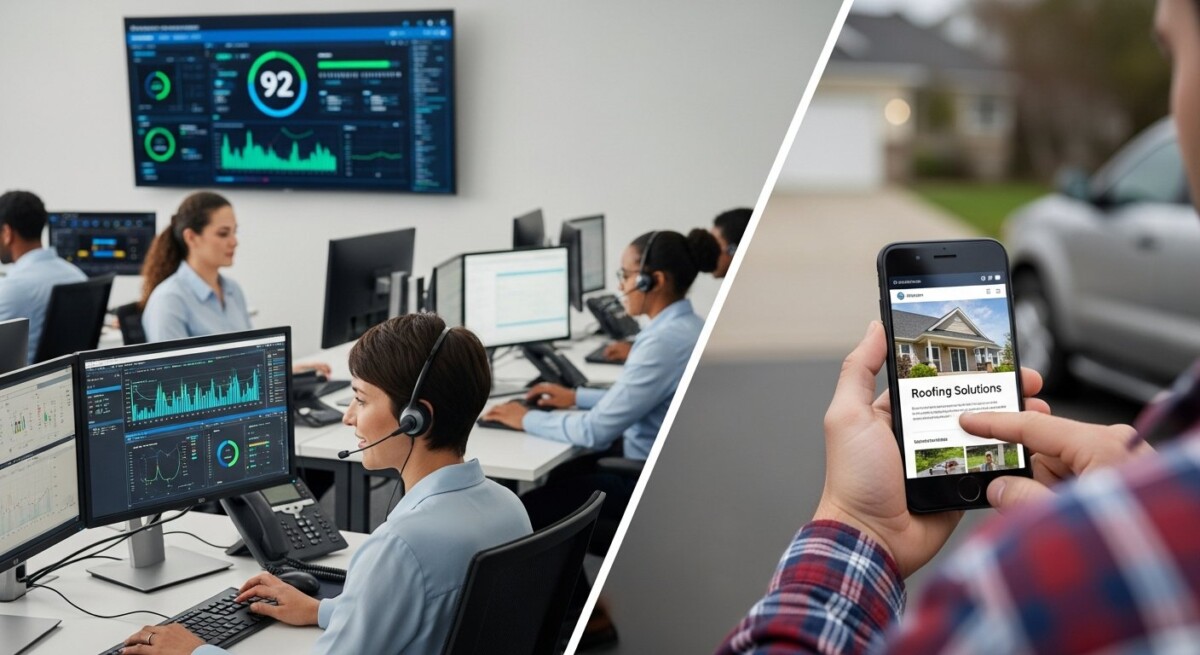
AI powered call routing uses machine learning algorithms to evaluate incoming calls and predict which callers are most likely to convert. Instead of routing calls based solely on which agent has been idle longest, the system analyzes dozens of data points in milliseconds. These include the caller’s phone number, past interaction history, time of day, geographic location, and even the specific marketing campaign that generated the call. The AI then assigns a real-time intent score and routes the call to the best-matched agent.
For example, consider a home improvement company running separate ad campaigns for roofing and window replacement. A caller who clicks a roofing ad, visits the pricing page, and calls within 30 seconds demonstrates higher intent than someone who calls after browsing the blog. AI powered call routing recognizes these behavioral signals and prioritizes the high-intent roofing lead for a senior sales representative, while routing the lower-intent caller to a general information line. This intelligent triage ensures that your top performers spend their time on calls most likely to close.
How High-Intent Callers Differ From Standard Leads
Not all phone calls are created equal. Standard leads may be curious, comparing options, or simply gathering information. High-intent callers, on the other hand, exhibit behaviors that strongly indicate readiness to purchase. They typically call during business hours, stay on the line longer, ask specific product or service questions, and often reference a specific ad or promotion. These callers have already done their research and are reaching out to make a decision.
AI powered call routing identifies these subtle differences by analyzing patterns across thousands of calls. The system learns which caller characteristics correlate with successful conversions. For instance, it might discover that callers from a particular zip code who mention a competitor by name convert at twice the rate of other leads. Over time, the AI refines its routing criteria to become more accurate, ensuring that high-intent callers always receive priority treatment.
This distinction matters because the cost of mishandling a high-intent caller is substantial. A delayed response, a wrong department transfer, or a poorly matched agent can cause the caller to hang up and call a competitor. In our guide on geo targeting local high intent call leads, we explain how location-based signals further refine routing decisions to capture local buyers at the moment of peak interest.
Key Benefits of AI Powered Call Routing for High Intent Callers
Implementing AI powered call routing delivers measurable improvements across your entire sales operation. The benefits extend beyond simply answering calls faster; they transform how your team prioritizes and converts leads.
- Higher Conversion Rates: High-intent callers speak with the best-suited agent immediately, reducing friction and increasing close rates by 20% to 40%.
- Reduced Cost Per Acquisition: By eliminating wasted agent time on low-quality calls, your marketing spend generates more revenue per dollar.
- Improved Customer Experience: Callers feel valued when they are connected quickly to someone who understands their needs, building trust and loyalty.
- Better Agent Utilization: Top performers focus on high-value conversations instead of fielding general inquiries, boosting team morale and efficiency.
- Data-Driven Optimization: Every call generates data that feeds back into the AI model, continuously improving routing accuracy over time.
These advantages compound as your call volume grows. A business handling 500 calls per day can see a significant revenue lift simply by routing the top 20% of callers to specialized agents. The AI does not just identify high-intent callers; it also learns which agent skills match each caller profile, further increasing the likelihood of a successful outcome.
How AI Determines Caller Intent in Real Time
The technology behind AI powered call routing relies on several layers of analysis that happen within milliseconds of a call arriving. The first layer is historical data matching. The system checks the caller’s phone number against your CRM, past call records, and any previous purchases or inquiries. A returning customer with a high lifetime value is immediately flagged as high intent.
The second layer uses real-time behavioral signals. If the caller arrived from a specific paid search ad, the AI considers the ad’s conversion rate, the keyword used, and the landing page visited. Callers who come from high-intent keywords like “buy now” or “get a quote” receive a higher score than those from informational queries. The system also analyzes the caller’s interaction with your website using session replay data, looking for actions like viewing pricing pages, adding items to a cart, or filling out a contact form moments before calling.
The third layer applies predictive modeling. The AI compares the current caller’s profile against thousands of past callers with similar attributes. It identifies patterns that historically led to conversions and applies that probability to the current call. For example, a caller from a specific metro area calling between 10 AM and 2 PM on a Tuesday might have a 90% intent score, while a caller from a different region at 8 PM on a Saturday might score only 30%.
All of this happens before the phone rings. The system then uses the intent score to route the call to the appropriate queue. High-scoring callers bypass IVR menus entirely and connect directly to a senior sales agent. Medium-scoring callers go to a general sales team, while low-scoring callers may be offered a callback option or routed to a self-service information line.
Integrating AI Call Routing With Your Existing Tech Stack
For AI powered call routing to work effectively, it must integrate with your existing marketing and sales tools. The most common integrations include CRM platforms like Salesforce or HubSpot, call tracking software, and analytics tools such as Google Analytics. When a call arrives, the AI pulls data from these systems to build a complete picture of the caller.
Astoria Company’s pay-per-call platform is designed to support this level of integration. Advertisers can connect their call routing system directly to the platform’s lead exchange, allowing real-time intent scoring to influence which calls are purchased and routed. Publishers benefit from higher conversion rates on the calls they generate, making their traffic more valuable to buyers.
The integration process typically involves three steps. First, you map your data sources so the AI can access caller history, campaign attribution, and CRM records. Second, you define your intent scoring criteria based on your historical conversion data. Third, you configure routing rules that determine which agents or departments receive calls at each intent level. Once live, the system requires minimal ongoing maintenance as the AI learns and adjusts automatically.
Best Practices for Implementing AI Call Routing
Success with AI powered call routing depends on thoughtful implementation. Start by auditing your current call data to identify patterns in high-converting calls. Look for common attributes such as time of day, geographic region, campaign source, and caller behavior. Use these insights to train your initial intent scoring model.
Next, segment your agents based on skills and performance. Not all sales representatives are equally effective with every type of caller. Some excel at closing high-ticket items, while others are better at nurturing long-term leads. AI routing works best when it can match caller intent with agent strengths. Create routing groups that reflect these differences.
Finally, monitor and iterate. No AI model is perfect on day one. Track key metrics like conversion rate by intent score, average handle time, and caller satisfaction. Use this data to refine your scoring criteria and routing rules over time. The most successful implementations treat AI routing as a continuous improvement process, not a one-time setup.
Measuring ROI From AI Powered Call Routing
The return on investment for AI powered call routing is substantial when measured correctly. Calculate your baseline conversion rate and average deal size before implementation. After deployment, track the same metrics for calls routed as high intent versus those routed through standard queues. Most businesses see a 25% to 50% improvement in conversion rates for high-intent calls.
Factor in the reduction in wasted agent time. If your top sales rep previously spent 40% of their day on low-quality calls, AI routing can reclaim that time for high-value conversations. Multiply those hours by the rep’s average close rate and deal size to quantify the revenue impact. Also consider softer benefits like improved customer satisfaction scores and reduced agent turnover.
For a typical mid-sized business spending $50,000 per month on pay-per-call advertising, a 30% increase in conversion rates from high-intent callers could generate an additional $150,000 in monthly revenue. The technology pays for itself quickly when deployed with clear goals and proper measurement.
AI powered call routing for high intent callers is no longer a futuristic concept; it is a proven strategy that leading businesses use to dominate their markets. By connecting motivated buyers with the right sales talent at the right moment, you eliminate friction from the buying process and maximize every marketing dollar. The phone call remains the highest-converting channel in existence, and AI ensures you never waste that opportunity again.
To see how real-time intent scoring can transform your call traffic, explore the Ping Post Technology Platform for seamless integration with your existing lead generation infrastructure. The combination of AI routing and robust data exchange creates a powerful engine for sustainable revenue growth.